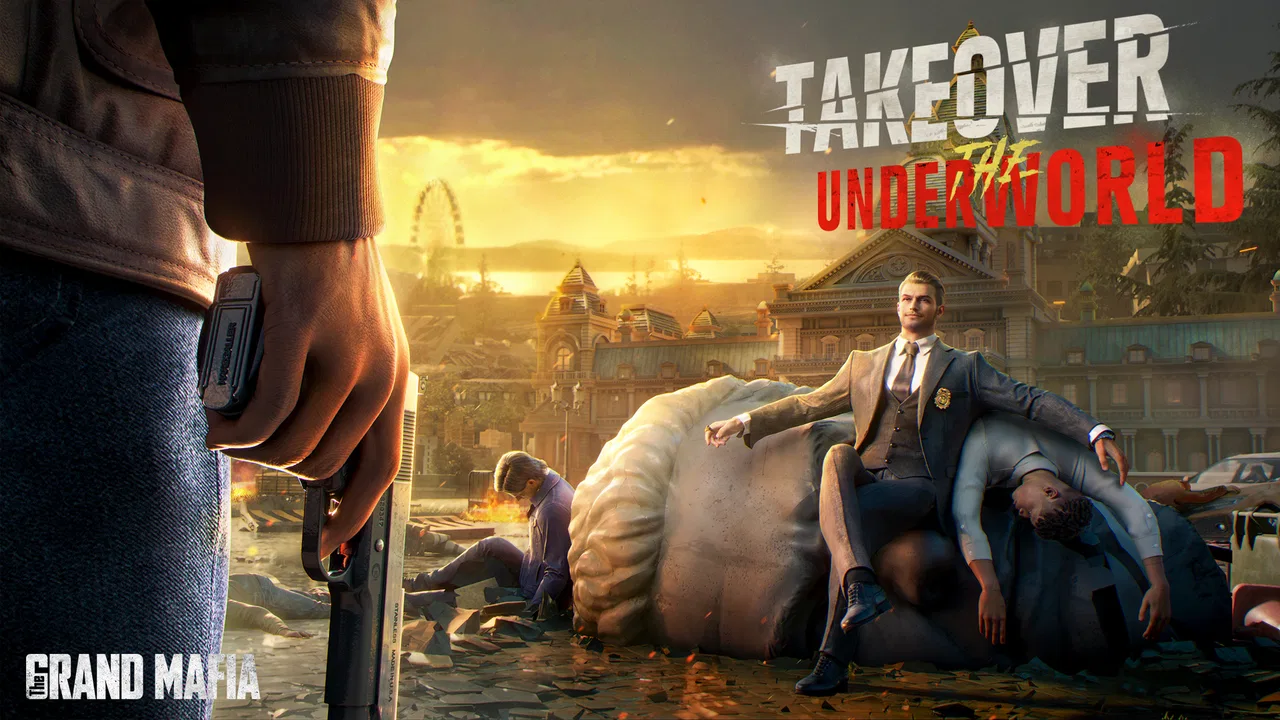
The Grand Mafia
- 4.5
- Rating
- 50.00M
- Installs
- Free
- Price

 Analysis by App-foxy
I spent time with The Grand Mafia as a mobile strategy game built around one clear fantasy: rising through a criminal underworld until the city answers to you. That premise gives every upgrade and confrontation a sense of purpose, but it also comes with the slower rhythm and monetization pressure I expect from a long-term base-management game. My impression is positive overall, although it is much better suited to patient planners than to people looking for quick matches or a purely casual experience.
Developed by Phantix Games, the game is free to start and has reached more than 50 million installs. Its average score sits at 4.5 from roughly 329,000 ratings, which suggests that the combination of territory, progression, and organized competition has found a large audience. It is rated Mature 17+, so I would not treat it as a family-friendly strategy title simply because it runs on a phone. The tone and criminal theme are central to the experience.
How The Grand Mafia feels in its current state
The first thing I noticed is that this is not a traditional strategy game where I place units on a battlefield and finish a match in a few minutes. The main loop is closer to managing an expanding organization. I work through missions, improve my base, develop useful characters, and make decisions about where to spend limited time and resources. The city is the stage, but the real contest is long-term preparation.
You May Also Like

 Pandora - Music & Podcasts
Pandora’s Music Is Easy to Start, but Harder to Recover
Pandora’s strength is its low-effort path from a seed to a station. Its weak spot is how much confidence it asks you to place in connection, setup, and quiet recovery.

 AccuWeather: Weather Radar
AccuWeather Review: A Quick, Clear Forecast for Everyday Decisions
For everyday plans, the best forecast is the one you can understand quickly. AccuWeather makes rain timing, radar, and local conditions easy to act on, with a few trade-offs.

 Hill Climb Racing
Why Hill Climb Racing Still Turns Crashes Into One More Run
A tiny car, a bumpy hill and one more upgrade: Hill Climb Racing keeps resurfacing because its simple chaos makes every near-miss feel personal.

 AliExpress - Shopping App
AliExpress Makes Global Shopping Feel Personal, but Shoppers Bear the Risk
AliExpress turns a global marketplace into a pocket-sized discovery engine. Its reach is useful, its shopping loop compelling, and its trade-offs easy to miss.

 Lords Mobile: Kingdom Wars
Lords Mobile Is a Kingdom-Building Routine, Not a Quick Match
A case-by-case verdict on the building, battles, device demands, and social commitments that make Lords Mobile rewarding for some players and exhausting for others.

 PDF Scanner app - TapScanner
TapScanner Makes Paperwork Easier to Capture, Check, and Share
TapScanner makes scanning with a phone feel less like a rescue operation and more like a dependable step in getting work done. Its capture tools are useful, though not flawless.
More From Our News Desk
View All News


That structure makes the opening hours approachable. Progress arrives frequently at first, so I always had a task to complete or an improvement to begin. The game does a good job of giving early actions a visible connection to the larger goal. Instead of feeling like a collection of unrelated menus, the activities generally point back toward becoming stronger and claiming more influence.
The trade-off becomes clearer later. Construction, research, character development, and other forms of advancement compete for attention. I had to decide whether to improve immediate strength or prepare for a benefit that would take longer to pay off. That choice is where the strategy becomes more interesting, but it is also where the waiting and spending pressure become harder to ignore.
For someone who enjoys checking a game several times a day, this rhythm can be satisfying. I could make a short planning decision, leave a long task running, and return later to continue the chain. It fits small breaks better than a game that demands a full uninterrupted session. On the other hand, anyone expecting constant action may find the core loop too dependent on timers and gradual accumulation.
The criminal-city theme is more than decoration
The setting gives the progression a stronger identity than a generic kingdom-building game. Instead of simply collecting farms, castles, or fantasy troops, I am building a criminal organization and competing for control in a city shaped by that theme. The characters and missions support that atmosphere, making the rise to power feel more personal than a spreadsheet of anonymous buildings.
I also found that the theme changes how I interpret setbacks. Losing ground or falling behind another group feels like a challenge to my position rather than just a lower number on a screen. That emotional framing is useful because long-term strategy games need a reason for the player to care about incremental improvements. Here, the ambition to seize the city’s crown supplies that reason.
Still, the mature presentation will not appeal to everyone. If you prefer clean, abstract strategy or a calm city builder, the criminal subject matter may feel excessive. The age rating is an important part of the decision, not a minor label to overlook when installing a free game.
What I would do during a normal day
Imagine starting the morning with only a few minutes before work or school. I would collect completed rewards, check which upgrade is closest to finishing, and begin the next task that supports my current priority. Rather than spending resources immediately, I would look at the next meaningful milestone and avoid scattering materials across too many improvements.
Later, during a lunch break, I might review character development and prepare for an activity that requires more strength. In the evening, I would have enough time to examine the city map, coordinate with other players if the current situation demanded it, and decide whether an offensive move was sensible or premature. That routine is where the game makes the most sense: short visits connected by a larger plan.
The useful lesson is that logging in often is not the same as playing efficiently. I made better progress when each visit had a purpose. Collecting everything without deciding what it supported left me with a fuller inventory but no clear advantage. The game rewards a simple habit: choose one near-term objective, then make most actions serve it.
Progression, updates, and the effect on established players
The current version is 1.5.273, and the game was released on August 6, 2020. Those details matter because this is an established live mobile title rather than a new experiment still searching for its identity. A version number this far along usually means the experience has had time to develop beyond its original launch structure, and my time with it felt consistent with a game designed for ongoing progression rather than a one-off campaign.
I would be careful, however, about treating the current version as a promise of a particular future. A version label tells me where the product stands now; it does not guarantee that every system will remain unchanged or that upcoming additions will solve every weakness. For a new player, the practical point is that I am entering a mature ecosystem with established progression expectations, not starting alongside everyone else.
That can benefit existing users. Long-term players have more reason to protect their investment in developed characters, upgraded facilities, and accumulated knowledge. Their advantage is not only raw power; they also understand the timing of the game and know which decisions are costly to reverse. New players may need patience before they can participate on equal terms with the strongest groups.
For returning players, the biggest effect of continued development is likely familiarity mixed with adjustment. The central ambition remains easy to understand, but established accounts can make the game feel more layered than it appears at the beginning. Returning after a break may require time to remember priorities, inspect current goals, and rebuild a routine instead of rushing into competition.
I appreciate that the game has a clear long-term identity, but that same identity creates an entry barrier. In a short competitive title, a new player can learn the rules and catch up through skill in one evening. Here, accumulated progression matters. I would recommend starting with modest expectations and treating the first stage as preparation rather than expecting immediate dominance.
Where the strategy actually lives
The most valuable decisions are often about timing, not simply choosing the largest available upgrade. A powerful improvement is less useful if it blocks a more urgent development or leaves me unable to respond to a changing situation. I learned to think in sequences: what do I need now, what will that unlock, and what resource will become the next bottleneck?
One practical approach is to separate growth into three questions. First, do I need stronger direct power for an immediate confrontation? Second, would a research or infrastructure improvement increase future efficiency? Third, am I spending because the purchase is useful, or because the interface is presenting it attractively? Asking those questions reduced waste and made the game feel more strategic.
Another non-obvious trade-off is the value of specialization. Trying to improve every area at once sounds safe, but it can produce an account that is broadly developed and strong in nothing. Concentrating on a clear role may make certain situations harder, yet it gives resources a sharper purpose. I would not recommend copying another player’s path automatically; the right focus depends on whether I care more about personal growth, group contribution, or competitive pressure.
Group play also changes the meaning of preparation. Even when I was not actively fighting, my readiness affected how useful I could be to others. A player who plans upgrades and keeps important resources available can respond more effectively than someone who spends everything the moment it appears. That is one reason the game feels more social than a solitary city builder, even when I am completing routine tasks alone.
Free access and the pressure to spend
The game can be downloaded and started without an upfront charge, which makes it easy to test the premise before committing time. Its in-app purchases range from $0.99 to $99.99 per item. That range tells me the economy is designed to support both small optional purchases and much larger spending, so I would approach the store carefully rather than assuming every offer is necessary.
My strongest advice is to avoid making a purchase during a moment of frustration. Waiting for an upgrade or falling behind a rival can make an offer feel urgent, but urgency is not the same as value. I would first identify whether the purchase changes my long-term plan or merely shortens a delay. If it only removes waiting, I would save the money and let the timer run.
This is also where The Grand Mafia differs from a premium strategy game. A premium title usually asks for money once and then lets the player focus on its systems. Here, the free entry is more inviting, but the ongoing economy becomes part of the experience. If you dislike recurring purchase prompts or competitive environments where spending may influence progress, a paid, self-contained strategy game will probably be a better fit.
Players who do spend should still set a limit before beginning. I find that a fixed personal budget is more useful than deciding separately for every offer. It turns the store from an emotional response into a deliberate choice. Free-to-play does not have to mean pay-to-win in every personal experience, but it does require discipline if I want the game to remain enjoyable on my terms.
Where it still falls short
The largest weakness is the potential gap between intention and activity. I may understand exactly what I want to achieve, yet the game can make me wait for the required development step. That is acceptable when I am treating it as a background strategy hobby, but frustrating when I sit down wanting a substantial session immediately.
The interface also asks me to manage several layers of information. New players can follow the guided path, but later decisions are less obvious because many improvements compete for attention. I recommend resisting the urge to upgrade whatever is highlighted first. Take a moment to inspect the objective behind the recommendation and decide whether it supports the way you actually want to play.
Competition creates another limitation. The game’s long-term structure is motivating when I feel that my decisions matter, but it can be discouraging when stronger, older accounts define the local environment. A patient player can still enjoy development without chasing the top position, yet someone who needs an even playing field may find the experience uncomfortable.
The mature theme is a further boundary. I would skip this title for younger players and for anyone who wants a neutral strategy setting. The fact that it is popular and highly rated does not make its subject matter universally suitable.
Who should try it and what I would watch next
I would recommend The Grand Mafia to players who enjoy persistent progression, city control, character development, and decisions that pay off over several visits. It is especially appealing if you like checking a game throughout the day, planning upgrades around future needs, and participating in a world where other players can influence the value of your choices.
I would not choose it for someone who wants fast, self-contained matches, a completely offline experience, or a strategy game with no spending pressure. I would also point a younger player toward a different category entirely because of the Mature 17+ rating and the criminal theme.
Compared with a conventional turn-based strategy game, this one gives me less control over every individual encounter but more responsibility for the shape of my long-term organization. Compared with a typical city builder, it gives the city a more competitive and character-driven purpose. Compared with a premium game, it is easier to enter but asks me to manage time and purchases as part of the design.
For new users, I would watch three things during the first stretch. Do the timers feel like a satisfying planning tool or an interruption? Does the criminal setting make the progression more engaging or less comfortable? And can I enjoy improving steadily without feeling pushed toward the store? The answers will tell me more than the opening rewards do.
For established users, the important question is whether continued development keeps the city meaningful rather than simply adding more obligations. A healthy future for this kind of game depends on giving experienced players worthwhile decisions while still leaving newcomers a believable route into the community. The current version shows an active, mature product, but expectations should remain grounded in what is playable now rather than in promises about what may come later.
My final view is that The Grand Mafia succeeds when I treat it as a patient strategy routine instead of a quick action game. Its strongest feature is the way the criminal-city fantasy gives ordinary upgrades a clear emotional purpose. Its biggest cost is the time, complexity, and financial restraint required to stay comfortable. If that balance sounds appealing, I think it is worth trying for free. If you want immediate battles and a clean finish after every session, I would choose another strategy game instead.
FAQs for The Grand Mafia
01What is The Grand Mafia about?
The Grand Mafia is a strategy and role-playing game centered on organized crime. You take control of a mafia family, recruit and upgrade skilled characters, expand your territory, gather resources, and compete against rival players. The game combines city development, real-time strategy, story chapters, character progression, and alliance-based events, making it more focused on long-term management than quick, casual matches.
02Is The Grand Mafia free to download and play?
Yes, The Grand Mafia can generally be downloaded and played for free on supported Android and iOS devices. However, it includes optional in-app purchases for premium currency, resource bundles, speed-ups, and progression-related items. You can advance without spending money, but free players may need more patience because construction timers, upgrades, and competitive events can become increasingly demanding as the account develops.
03Does The Grand Mafia require an internet connection?
Yes, an active internet connection is required for most, if not all, of the important features in The Grand Mafia. Your progress is linked to online servers, and the game relies on real-time events, alliance activities, rankings, territory competition, and cloud-based account data. It is therefore not a suitable choice if you are looking for a fully playable offline mafia game during travel or without mobile data.
04Is The Grand Mafia suitable for children?
The Grand Mafia is primarily intended for mature players. Its setting includes criminal organizations, violence, threats, weapons, and other themes associated with organized crime. The game may also contain chat features, competitive interactions, and optional purchases. Parents should review the age rating in their region, use device-level purchase restrictions, and consider supervising online communication before allowing younger users to install and play it.
05What should new players know before starting The Grand Mafia?
New players should expect a game built around gradual progression, timers, resource management, and regular participation. Completing early missions, upgrading the main buildings, training troops, and joining an active alliance can make a major difference. It is also wise to save premium currency for useful events rather than spending it immediately. Players who dislike waiting, recurring notifications, or highly competitive multiplayer systems may find the later stages demanding.
Pros
- Engaging mix of base building
- strategy
- and real-time PvP.
- Large criminal underworld setting with stylish visuals and cutscenes.
- Many heroes offer different skills and team-building options.
- Alliance features encourage cooperation
- planning
- and shared objectives.
- Regular events provide new challenges and extra rewards.
Cons
- Progress becomes heavily dependent on timers and resource management.
- Premium purchases can create a noticeable advantage in competitive play.
- The amount of menus and systems may overwhelm new players.
- Upgrading buildings and heroes can require considerable daily commitment.
- Chat and alliance activity may be essential for the best experience.

The Grand Mafia
Gallery